

Repair or replace? How to decide when your boat's electronics fail
The industry's default answer is often that it needs replacing. Sometimes that's right. But in many cases the fault is in one specific component, not the whole unit, and replacing all of it means overspending.
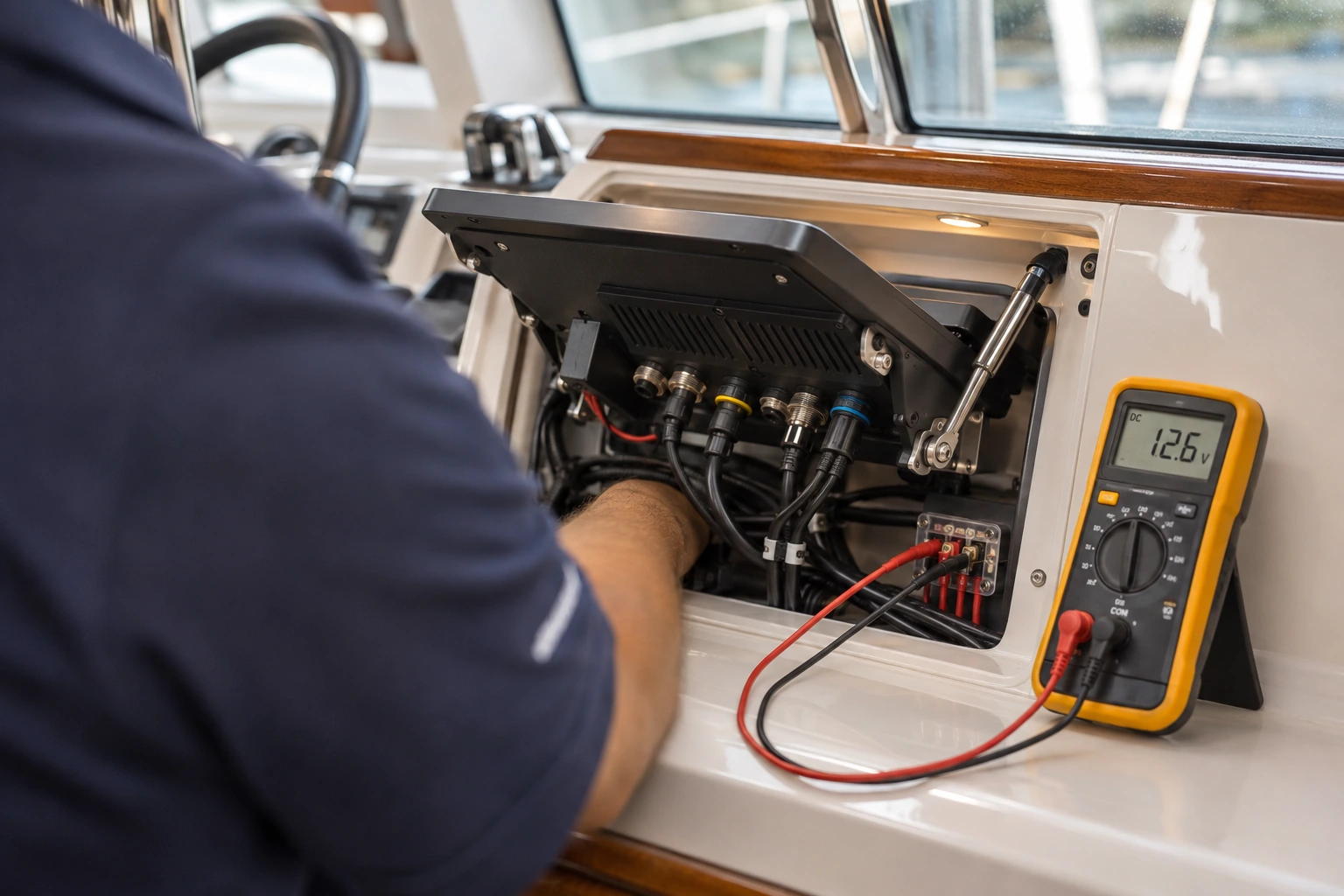
Why replacing is the easiest answer, not always the best
Replacing a whole unit is quick to quote and easy to sell. The problem is that it doesn't distinguish between a component fault —repairable and cheaper— and genuine end of life, where replacement is the right call.
Without a diagnosis before deciding, the owner overpays by default.
When repairing makes sense
- The fault is in an identifiable component: screen, power supply, connector
- The unit is part of an NMEA network and replacing it would force an upgrade
- The repair costs significantly less and doesn't compromise reliability
When replacing really is the best option
- The manufacturer no longer provides software or firmware support for the model
- The unit has failed repeatedly at the same point
- The repair cost approaches that of a new unit with no advantage
A simple test before asking for a quote
Before assuming a unit needs replacing, ask one specific question: does anyone know exactly which component has failed? If not, the logical next step is a diagnosis.
It's the difference between deciding with data and deciding by default.
Request a diagnosis
Tell us your boat and the system you want to install, repair or upgrade. We'll reply with a diagnosis and a no-obligation quote.
- Component-level diagnosis
- On-board service, no removal
- Support in English and Spanish