

Onboard communications and safety (GMDSS)
GMDSS covers the equipment that comes into play when something goes wrong at sea: VHF radio, AIS, SART transponders and EPIRBs. These aren't units you check when they fail: they're the ones that have to work precisely when everything else has failed.
What we install and maintain
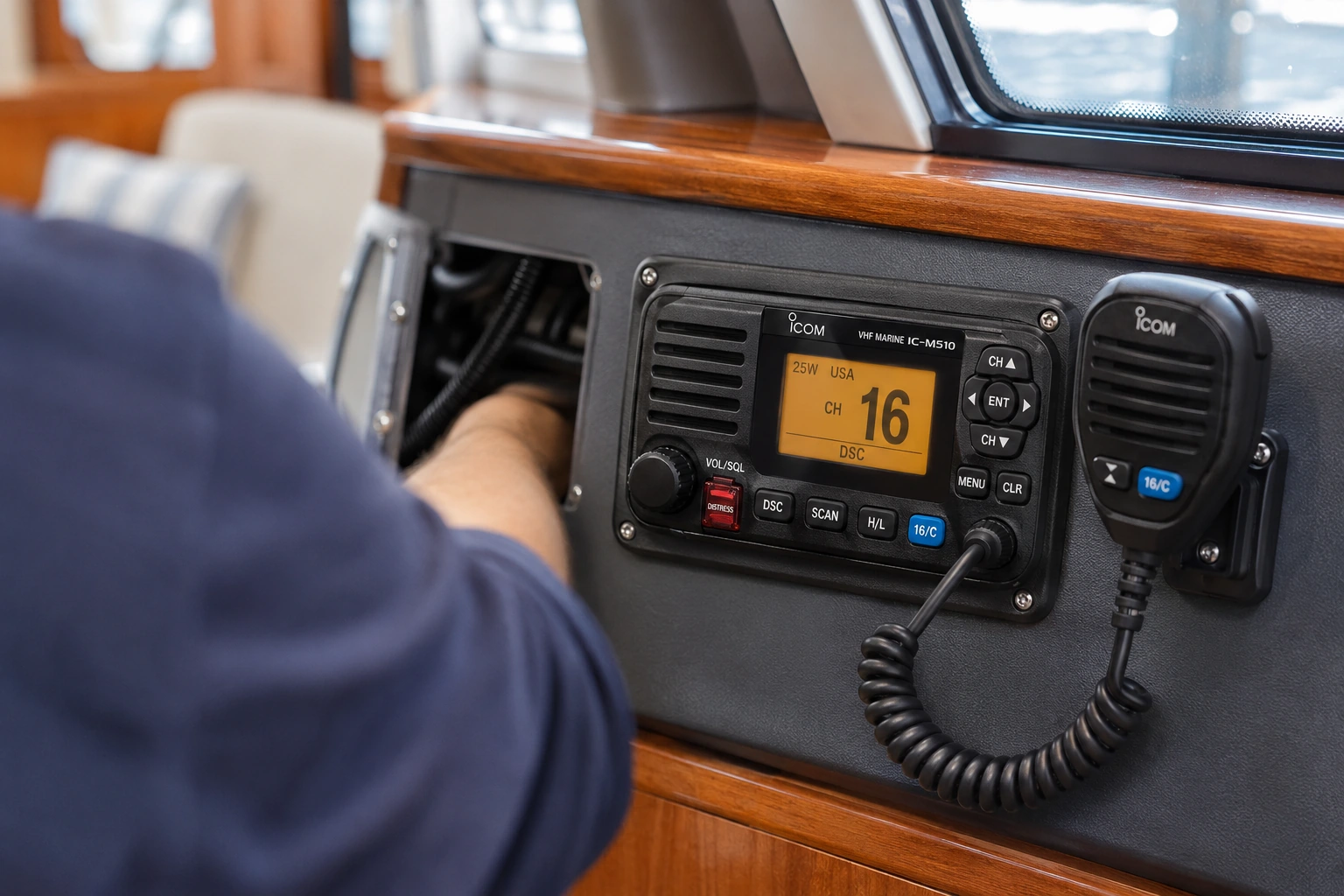
- Fixed and handheld VHF radios with DSC (digital selective calling)
- AIS systems, both Class A and Class B
- SART transponders for vessels that require them
- Navtex receivers and antennas
- Satellite connectivity on board
- Coordinating EPIRB testing with the authorised station
In Spain, programming an EPIRB requires specific authorisation from the Directorate General of the Merchant Navy. That's why we talk about coordinating testing with the authorised station, not programming the beacon ourselves.
Equipment we work with
Icom radios, Em-Trak AIS transponders, Jotron safety equipment, Shakespeare antennas and Starlink connectivity, among others.
Why this isn't optional
Leisure craft authorised to sail in certain zones are required by regulation to carry an EPIRB on board.
Beyond the legal requirement, it's the device that alerts rescue coordination centres in a real emergency. Its maintenance —battery and hydrostatic release— can't be put off.
How often it's checked
As a general industry reference, EPIRBs usually need checking every 12 to 24 months depending on the manufacturer, including the battery and hydrostatic release. Check your unit's manual for the exact interval.
Frequently asked questions
Is an EPIRB mandatory on my boat?
It depends on your boat's authorised navigation zone. We'll confirm it for your specific case.
What if my VHF doesn't have DSC?
We can look at replacing or upgrading the unit. DSC is key so that a distress call automatically includes your position.
Do you check safety equipment on commercial or charter vessels?
Yes, including those that require periodic inspections according to their navigation category.
When was your safety equipment last checked?
Beacon battery, hydrostatic release and a real VHF test. We'll tell you what's due and when.
- Component-level diagnosis
- On-board service, no removal
- Support in English and Spanish